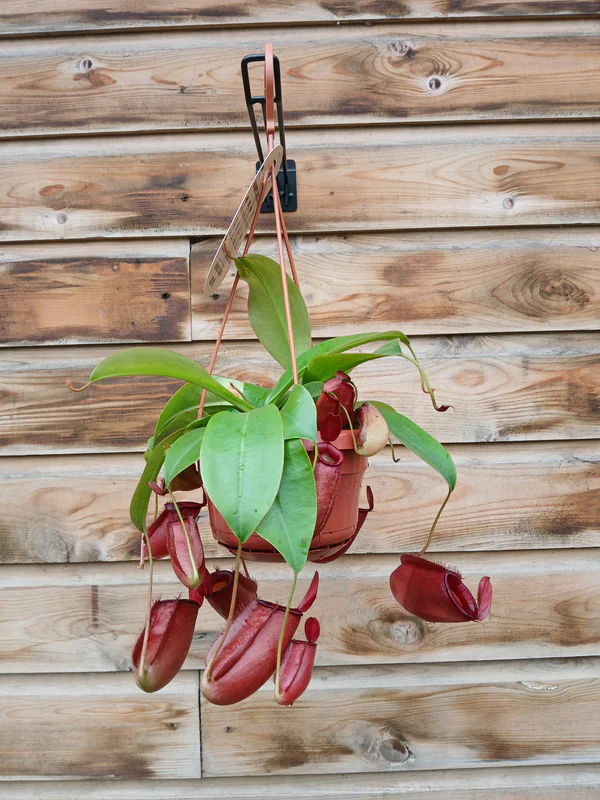
Nepenthes 'Gaya' P14, hanging pot
Nepenthes ‘Gaya’ Pitcher Plant – P14 Hanging Pot
The Nepenthes ‘Gaya’, commonly known as a Pitcher Plant, is a fascinating tropical carnivorous plant that adds a unique and exotic touch to any indoor space. Its elegant elongated pitchers display beautiful shades of deep green with reddish tones, creating a striking decorative feature in homes, offices, or plant collections.
This variety has a trailing or climbing growth habit, making it perfect for hanging baskets, shelves, or decorative terrariums. The plant naturally attracts and digests insects using its pitcher-shaped traps, making it both an eye-catching and functional houseplant.
Despite its exotic appearance, Nepenthes ‘Gaya’ is relatively easy to care for compared to many carnivorous plants, making it a great choice for both beginners and experienced plant enthusiasts.
Key Features
-
Unique carnivorous pitcher plant
-
Elegant green and reddish tubular pitchers
-
Ideal for hanging pots, shelves, or terrariums
-
Adds an exotic tropical look to indoor spaces
-
Naturally attracts and digests insects
-
Pot size: P14
-
Estimated growth after 5 years: 30–60cm trailing or climbing
Care Guide
Light: Prefers bright, indirect light. Avoid direct sunlight which may scorch the leaves.
Water: Keep the soil consistently moist using rainwater or distilled water. Avoid tap water with high mineral content.
Soil: Use a well-draining acidic compost mix suitable for carnivorous plants, such as sphagnum moss and perlite.
Feeding: The plant usually catches insects naturally. If grown indoors without insects, a very dilute carnivorous plant fertiliser can occasionally be used.
Maintenance: Remove old or dried pitchers and support trailing stems to encourage healthy growth and new pitcher development.
This striking carnivorous plant is perfect for anyone looking to add a rare, conversation-starting plant to their indoor collection.
Product Information
Product Information
Shipping & Returns
Shipping & Returns
Description
Nepenthes ‘Gaya’ Pitcher Plant – P14 Hanging Pot
The Nepenthes ‘Gaya’, commonly known as a Pitcher Plant, is a fascinating tropical carnivorous plant that adds a unique and exotic touch to any indoor space. Its elegant elongated pitchers display beautiful shades of deep green with reddish tones, creating a striking decorative feature in homes, offices, or plant collections.
This variety has a trailing or climbing growth habit, making it perfect for hanging baskets, shelves, or decorative terrariums. The plant naturally attracts and digests insects using its pitcher-shaped traps, making it both an eye-catching and functional houseplant.
Despite its exotic appearance, Nepenthes ‘Gaya’ is relatively easy to care for compared to many carnivorous plants, making it a great choice for both beginners and experienced plant enthusiasts.
Key Features
-
Unique carnivorous pitcher plant
-
Elegant green and reddish tubular pitchers
-
Ideal for hanging pots, shelves, or terrariums
-
Adds an exotic tropical look to indoor spaces
-
Naturally attracts and digests insects
-
Pot size: P14
-
Estimated growth after 5 years: 30–60cm trailing or climbing
Care Guide
Light: Prefers bright, indirect light. Avoid direct sunlight which may scorch the leaves.
Water: Keep the soil consistently moist using rainwater or distilled water. Avoid tap water with high mineral content.
Soil: Use a well-draining acidic compost mix suitable for carnivorous plants, such as sphagnum moss and perlite.
Feeding: The plant usually catches insects naturally. If grown indoors without insects, a very dilute carnivorous plant fertiliser can occasionally be used.
Maintenance: Remove old or dried pitchers and support trailing stems to encourage healthy growth and new pitcher development.
This striking carnivorous plant is perfect for anyone looking to add a rare, conversation-starting plant to their indoor collection.